
In recent years, the evolution of multimodal large language models has brought transformative capabilities to voice interaction and AI-driven communication. Among these, MinMo stands out as a breakthrough multimodal model designed to seamlessly integrate speech and text processing with state-of-the-art performance. Developed by researchers from Tongyi Lab and Alibaba Group, MinMo offers expansive capabilities for voice comprehension, generation, and real-time conversation, making it a front-runner in multimodal AI applications.
What is MinMo?
MinMo is a multimodal large language model equipped with approximately 8 billion parameters, trained on over 1.4 million hours of diverse speech data. Unlike previous native or aligned multimodal models, MinMo employs a sophisticated multi-stage training strategy that aligns speech and text modalities through speech-to-text, text-to-speech, speech-to-speech, and duplex interaction training phases. This results in an AI system capable of real-time, natural, and human-like voice conversations with remarkably low latency.
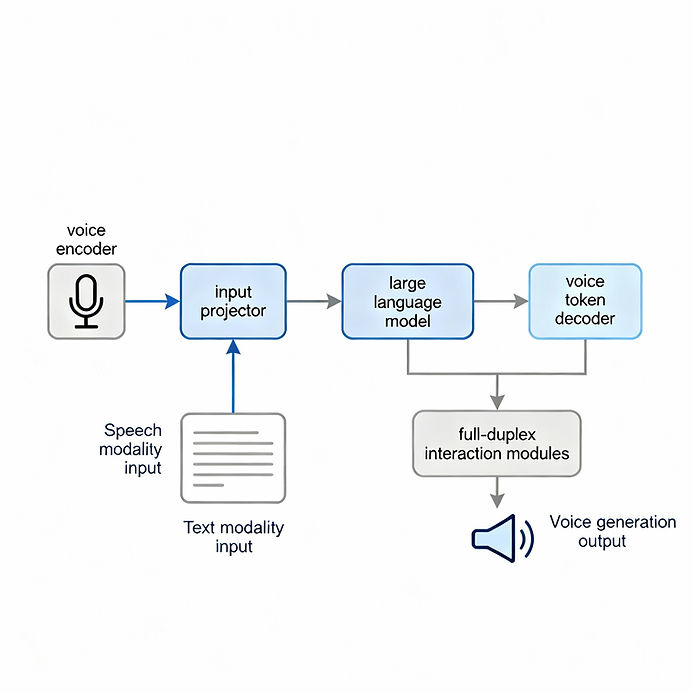
A flowchart showcasing minmo's workflow
Use Cases of MinMo
MinMo's multifaceted abilities empower a variety of practical use cases across industries and technology domains:
Multilingual Speech Recognition: MinMo excels in recognizing speech across multiple languages with high accuracy, surpassing many contemporary models. This helps in breaking language barriers and enabling global communication applications.
Speech Translation and Enhancement: The model supports seamless speech-to-text and speech-to-speech translation, offering real-time multilingual communication solutions that can be applied in customer service, live translation devices, and international conferencing.
Emotion Recognition and Custom Voice Generation: By interpreting emotional cues and different speaking styles, MinMo can generate speech responses that reflect nuanced emotions, dialects, and speaking rates. This capability is valuable for creating empathetic virtual assistants and interactive voice response (IVR) systems that feel more human.
Speaker Analysis and Identification: MinMo can analyze speaker attributes such as gender, age, and accent, useful for personalized services, security verification, and targeted marketing.
Full-Duplex Voice Interaction: MinMo supports simultaneous two-way communication, enabling conversations where the AI responds while still listening, which is crucial for natural dialogue agents and voice-controlled smart devices.
Applications Driven by MinMo
MinMo's broad range of applications showcases its versatility and impact:
Customer Support Automation: AI-powered agents using MinMo can handle complex voice interactions, understand customer emotions, and provide personalized, context-aware responses.
Accessibility Tools: Enhanced text-to-speech and speech-to-text capabilities aid visually impaired users and those with speech difficulties by providing more natural and responsive communication interfaces.
Multilingual Virtual Assistants: MinMo enables assistants that understand and respond fluently in multiple languages, expanding their usability globally.
Content Creation and Media: Automated dubbing, voice-over generation, and emotion-rich narration become possible with MinMo’s voice generation technology.
Real-time Collaboration and Conferencing: By enabling multilingual translation and speaker identification in meetings, MinMo enhances productivity in global teams.
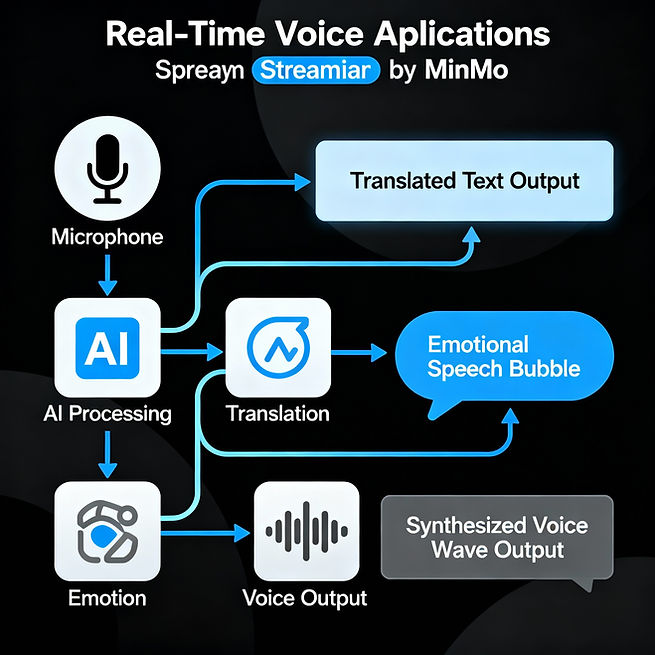
Flowchart show-casing sample applications of minmo
MinMo Integration Code Examples
Developers can utilize MinMo’s API or open-source libraries to build voice-enabled applications in Python. Below are illustrative code snippets that showcase common use cases such as speech recognition and text-to-speech conversion with MinMo:
This script demonstrates how to send an audio file to MinMo for transcription, leveraging its high-accuracy multilingual speech recognition capabilities
python
# Sample: Using MinMo for speech recognition
import minmo audio_file = "input_voice.wav"transcript = minmo.speech_to_text(audio_file)
print("Transcribed Text:", transcript)
This code highlights MinMo’s ability to generate expressive speech from text with controls for emotion and voice style, a feature ideal for personalized assistants and automated content creation.
python
# Sample: Text-to-Speech with MinMo
import minmotext_input = "Hello, welcome to the future of voice AI!"
audio_output = minmo.text_to_speech(text_input, voice_style="friendly", emotion="happy")
with open("output_voice.wav", "wb") as f:
f.write(audio_output)
Technical Highlights That Enable MinMo
What sets MinMo apart is its innovative architecture:
It leverages a powerful voice encoder for multilingual speech and emotion recognition combined with a large text-based language model for comprehensive understanding.
The novel streaming Transformer-based voice decoder balances low latency with high-quality audio generation.
The multi-stage alignment training ensures that the text and speech modalities reinforce rather than overwrite each other, preserving the original language model's capabilities while enhancing voice interaction.
Conclusion
MinMo represents a significant advance in multimodal artificial intelligence, bridging speech and text to deliver seamless voice interactions that are natural, expressive, and context-aware. Its wide-ranging use cases—from multilingual recognition and translation to emotional and duplex conversations—position it as a key technology for next-generation voice interfaces and AI communication systems. As the model and its ecosystem develop, MinMo will unlock countless innovations, revolutionizing how humans interact with machines through voice.