
Sodium benzoate (C7H5NaO2 or C6H5COONa), also known as Sobenate or Antimol, is an odorless, crystalline powder that has sparked scientific debate and consumer concern. This man-made compound is widely used as a preservative in the food, pharmaceutical, cosmetic, and industrial sectors. It has garnered praise for its effectiveness, but caution is warranted regarding its potential health risks. This article delves into the various uses of sodium benzoate, its benefits, and its suspected side effects, providing a balanced understanding of whether sodium benzoate truly deserves its “friend or foe” status.
What is Sodium Benzoate?
Sodium benzoate is an organic sodium salt formed by replacing protons from the carboxy group of benzoic acid with a sodium ion (Na+). While benzoic acid naturally occurs in foods like cinnamon, cranberries, and apples, sodium benzoate is manufactured by combining benzoic acid with sodium hydroxide. This process makes it far more water-soluble and suitable for commercial applications. As a preservative, sodium benzoate prevents spoilage by inhibiting the growth of bacteria, yeast, and mold, especially in acidic environments.
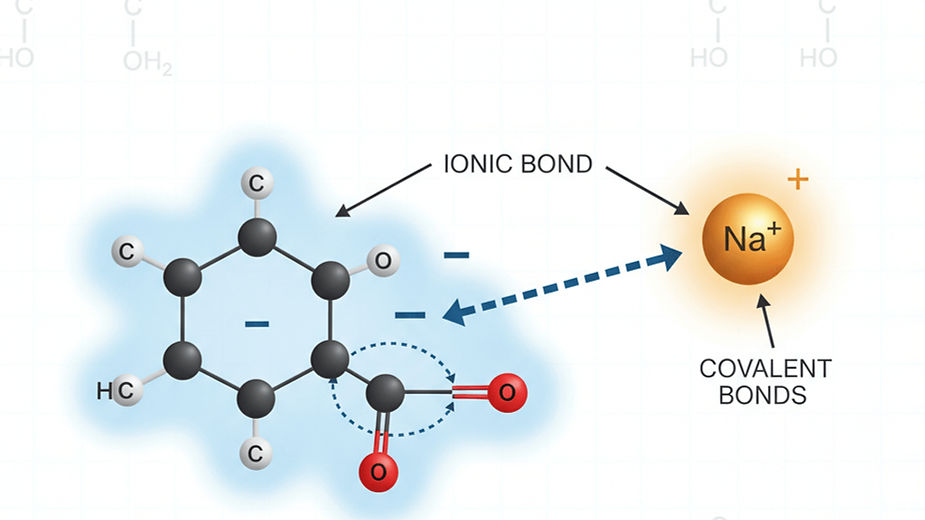
Chemical bonding of sodium benzoate
Uses of Sodium Benzoate
Food and Beverages
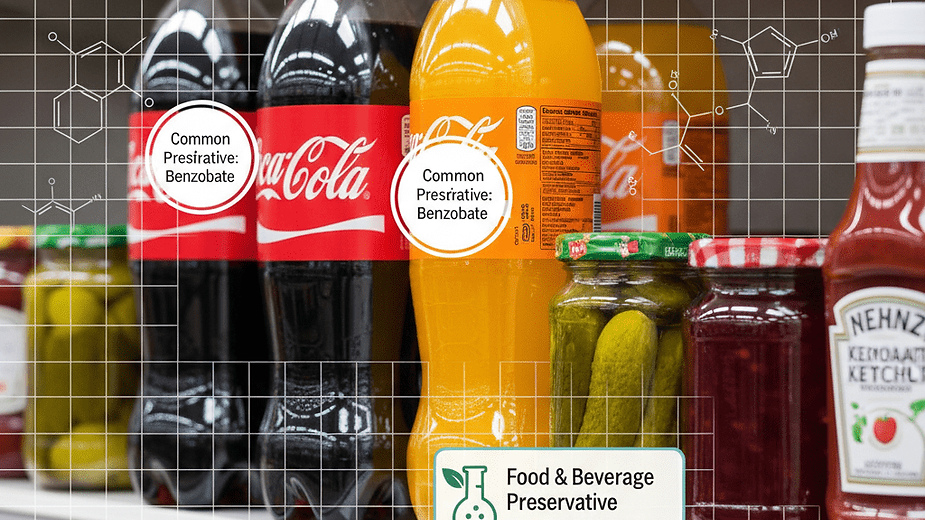
Food and Beverages in store
Sodium benzoate is one of the first preservatives to receive FDA approval for use in food. It is particularly effective in acidic foods, making it ideal for soft drinks, fruit juices, pickles, jellies, salad dressings, and condiments. In sodas, it helps maintain color, flavor, and shelf life. Sodium benzoate is so effective that it can keep products shelf-stable for two years or more.
Pharmaceuticals
In the pharmaceutical industry, sodium benzoate serves multiple roles. It prevents microbial growth in liquid medicines like cough syrup and acts as a tablet lubricant, aiding both pill manufacturing and dissolution. Notably, at medicinal doses, sodium benzoate is used to treat conditions characterized by high blood ammonia levels, such as certain metabolic disorders.
Cosmetics and Personal Care Products
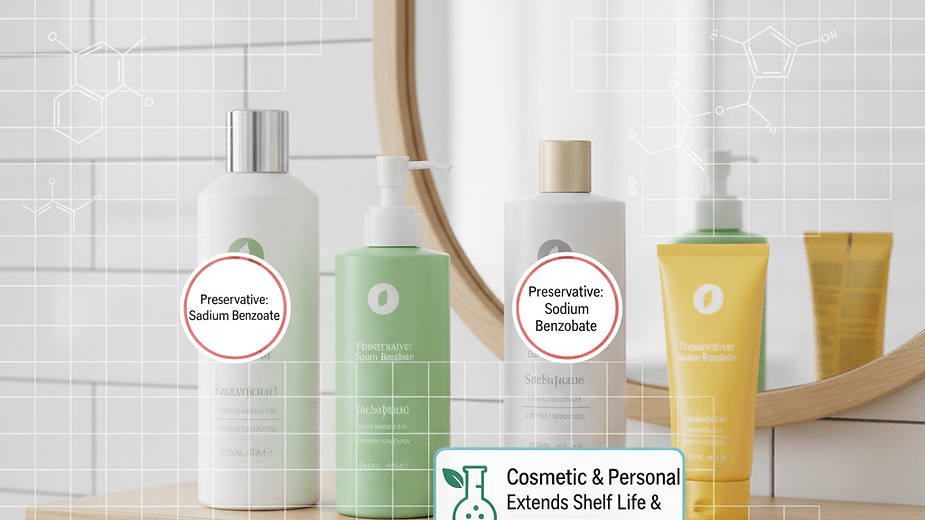
Cosmetics and personal care products
Many cosmetic and personal care products require protection from microbial contamination, particularly water-based formulations like lotions, shampoos, baby wipes, mouthwash, and toothpaste. Sodium benzoate is commonly chosen not only for its effectiveness and low cost but also for its relatively lower risk of causing irritation compared to other preservatives.
Industrial Applications
In addition to its use in foods and personal care, sodium benzoate is useful in industrial sectors. It acts as an anti-corrosive agent for coolants in car engines and serves as a stabilizer in various industrial processes, including photographic development and plastic manufacturing.
Benefits of Sodium Benzoate
The primary benefit of sodium benzoate is its powerful preservative effect. By preventing spoilage, it helps ensure food safety, prolongs shelf life, reduces food waste, and enables the mass distribution of perishable goods. In medicine, its role as a preservative enhances the safety and longevity of oral and liquid medications. When used as a prescription drug in controlled doses, it has been shown to help manage dangerous blood ammonia levels and is being investigated as a potential adjunctive treatment for conditions like schizophrenia and depression.
Side Effects and Safety Concerns
Despite its benefits, sodium benzoate is not without controversy. Scientific scrutiny has increased over potential health risks connected to its consumption and continuous exposure.
Conversion to Benzene
A significant concern is sodium benzoate’s ability to convert to benzene—a recognized carcinogen—when combined with ascorbic acid (vitamin C) in beverages and exposed to heat or light. In acidic beverages containing sodium benzoate and ascorbic acid, benzene can form via decarboxylation of benzoic acid. This reaction is catalyzed by trace metal ions and accelerated by heat and light, as documented in controlled studies and regulatory investigations. The International Council of Beverages Associations and regulators advise mitigation steps because storage temperature, light exposure, pH, and metal ions materially influence formation. Inhibitors like EDTA and sugars can reduce it in some matrices.
What Regulators Found in Products
FDA surveys following reports in 2005–2006 found that the vast majority of soft drinks contained either no detectable benzene or levels well below the EPA drinking water maximum contaminant level of 5 ppb. A small number of products exceeded 5 ppb and were reformulated, with retesting showing levels under 1.5 ppb.
The FDA states that benzene may form at very small levels in some carbonated beverages with benzoate and ascorbic acid and has published validated analytical methods to measure it in beverages.
Re-analyzing Harmful Effects and Real-World Risk
Benzene is a known human carcinogen, so any avoidable formation in foods warrants control. However, risk depends on dose, duration, and frequency of exposure. Most beverages today test at non-detect or low single-digit ppb after industry mitigation, implying low incremental risk for typical consumers.
Experimental and survey studies show formation increases with higher temperature and UV exposure, lower pH, presence of copper/iron, and certain formulations. Minimizing these conditions limits consumer exposure further.
Practical Risk-Reduction Guidance
Product Formulation: Avoid pairing sodium benzoate with ascorbic/erythorbic acid when feasible, control pH, chelate trace metals (e.g., with EDTA), and validate with benzene testing per published methods and guidance.
Storage and Distribution: Keep beverages cool and protected from light to suppress benzene formation over shelf life. These controls address key kinetic drivers identified by the FDA and literature.
Attention Deficit Hyperactivity Disorder (ADHD)
Some studies suggest a potential link between the intake of sodium benzoate (especially through sodas) and increased ADHD symptoms, both in children and adults. However, more extensive research is required to confirm this association.
Inflammation and Oxidative Stress
Animal studies have indicated that sodium benzoate can activate inflammatory pathways and produce oxidative stress in the body. Both of these factors are associated with chronic diseases and increased cancer risk. Although direct human evidence remains limited, these preliminary findings warrant caution.
Other Potential Health Effects
Test-tube and animal studies link sodium benzoate to decreased secretion of leptin, a hormone that regulates appetite. This suggests a possible role in appetite dysregulation and obesity. High concentrations in laboratory scenarios have also demonstrated cellular toxicity, though typical dietary exposures are significantly lower.
Regulatory Stance and Daily Intake Guidelines
The FDA allows up to a 0.1% concentration of sodium benzoate by weight in foods and beverages. The World Health Organization (WHO) sets an acceptable daily intake (ADI) at up to 5 mg per kilogram of body weight per day, which is well above what most diets provide. Your body does not accumulate sodium benzoate; it metabolizes and excretes the compound via urine within 24 hours, further supporting its general safety at regulated levels.
Sodium Benzoate: Should You Be Concerned?
Current evidence supports the overall safety of sodium benzoate in the amounts permitted by food safety authorities. Most people will never approach the maximum daily limit through normal consumption. Nevertheless, individuals with a known allergy or heightened sensitivity to sodium benzoate should avoid products containing this additive. Consumers concerned about cumulative chemical intake should consider selecting natural or preservative-free alternatives whenever practical.
Conclusion
Sodium benzoate remains an essential tool for modern food preservation, health care, and manufacturing. While it is classified as safe for general use, ongoing research is vital to detect any long-term risks, especially as dietary habits evolve and exposure patterns change. For now, occasional and regulated intake of sodium benzoate appears unlikely to harm most individuals. However, the “friend or foe” debate lingers—reminding consumers to stay informed and make mindful choices.