
Sodium laureth sulphate (SLES) is widely used in shampoos, soaps, and cleansers for its powerful foaming and cleansing properties. Though generally milder than its cousin sodium lauryl sulphate (SLS), sodium laureth sulphate can still cause skin and eye irritation, long-term dryness, and sensitivity issues. This article explores the harmful effects of sodium laureth sulphate, how to identify it on product labels, and why many consumers seek sulfate-free alternatives.
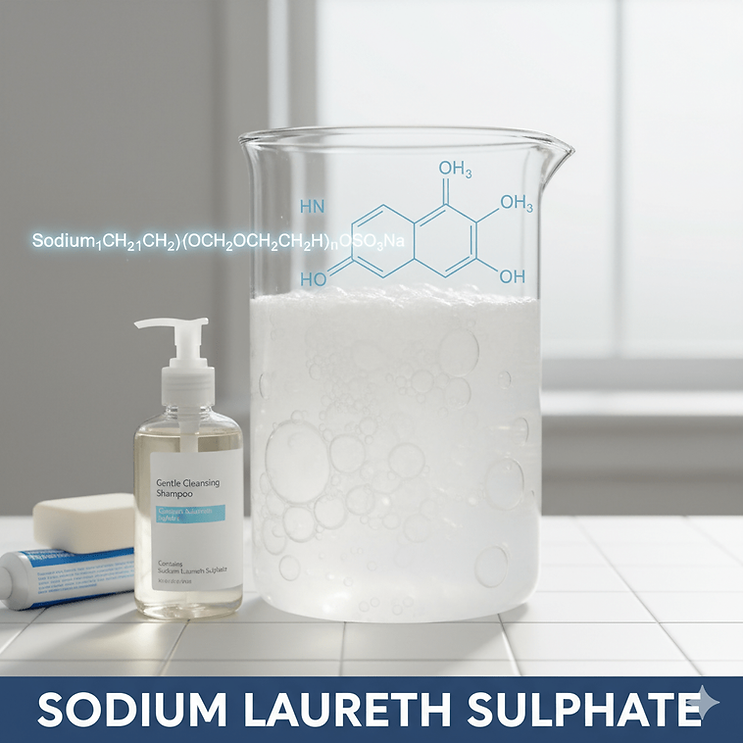
Sodium Laureth Sulphate
Harmful Effects of Sodium Laureth Sulphate
Sodium laureth sulphate is an anionic surfactant that effectively removes oils, dirt, and impurities by disrupting surface tension. However, this same action can strip away the skin's natural protective oils, leading to irritation and dryness. For people with sensitive or eczema-prone skin, sodium laureth sulphate may exacerbate symptoms, causing redness, itching, and flakiness. Eye irritation is common for products like shampoos containing this ingredient, especially if they come in contact with eyes.
Repeated exposure to sodium laureth sulphate over time can cause cumulative dryness and damage to the skin barrier, increasing transepidermal water loss. This weakens the skin’s defense against environmental aggressors and can promote inflammation or allergic reactions in some users. While sodium laureth sulphate is considered less harsh than SLS, both surfactants can have similar irritant effects if used frequently or in high concentrations.
Another concern linked to sodium laureth sulphate is the possibility of low-level contamination with 1,4-dioxane, a byproduct of the ethoxylation process used in its production. 1,4-Dioxane is a potential carcinogen, so reputable manufacturers apply rigorous purification techniques to minimize residual levels, but this potential contamination remains a key reason why some consumers avoid products containing sodium laureth sulphate.
How to Identify Sodium Laureth Sulphate in Products
Knowing how to spot sodium laureth sulphate on ingredient lists is essential for anyone sensitive or looking to avoid this chemical. It appears on labels as:
Sodium laureth sulphate
Sodium lauryl ether sulfate
Sometimes simply as SLES
This ingredient is prevalent in many shampoos, body washes, facial cleansers, and even toothpaste. It is usually listed among the top ingredients since it serves as the primary foaming agent. To reduce exposure, seek products labeled "sulfate-free" or check for the absence of the above names on the ingredient list.
Why Consider Sulfate-Free Alternatives?
Brands are increasingly offering sulfate-free alternatives as awareness of sodium laureth sulphate’s irritant potential grows. These formulations use gentler surfactants derived from natural sources or milder synthetic compounds like sodium cocoyl isethionate or glucosides. Choosing sulfate-free options can be particularly beneficial for those with dry, sensitive, or color-treated hair, as they maintain moisture and reduce irritation risk.